
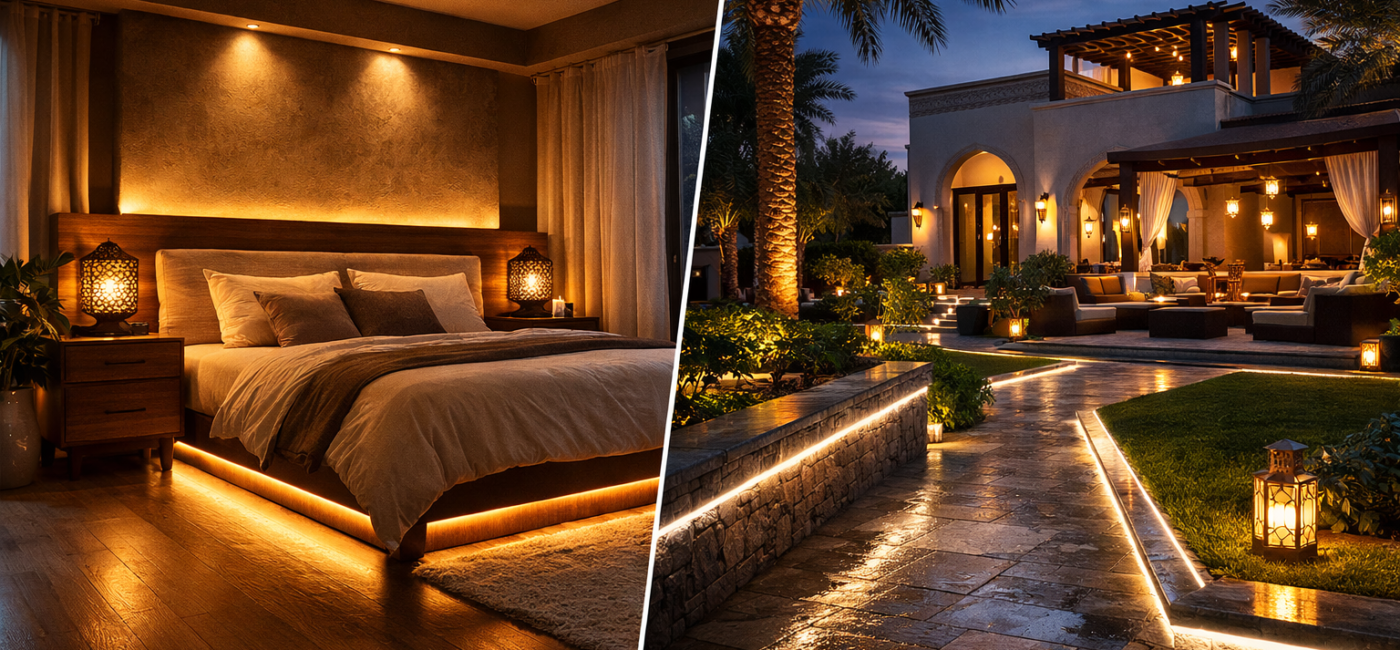
In Qatar, lighting is no longer just about visibility—it’s about atmosphere.
Walk into a modern villa in Lusail or The Pearl, and you’ll notice how lighting shapes the entire experience. Soft LED strips tucked into ceiling coves, warm glows behind TV panels, and elegant outdoor lighting wrapping around garden pathways or majlis seating areas.
But here’s what many people don’t see.
Behind those beautiful installations are countless failed attempts—LED strip lights that stopped working, dimmed unevenly, or completely broke down after just a few weeks outdoors. And in most cases, the issue isn’t poor installation or low quality—it’s choosing the wrong type of LED strip.
The confusion between IP20 LED strip lights and IP67 LED strip lights is incredibly common. On the surface, they look identical. They produce the same glow, come in the same colors, and are installed in similar ways. But internally, they are designed for completely different environments.
In a region like Qatar, where heat pushes past 45°C, humidity rises unexpectedly, and fine dust settles everywhere, that difference becomes critical.
If you’re planning a lighting project—whether it’s a cozy bedroom setup or a fully lit outdoor majlis—understanding this distinction will save you time, money, and frustration.
Understanding IP Ratings: Why They Matter More Than You Think
To truly understand the difference between IP20 LED strip lights and IP67 LED strip lights, you first need to understand what an IP rating actually represents.
IP stands for Ingress Protection. It’s essentially a measure of how well a product is sealed against external elements—specifically dust and water.
Think of it like clothing.
- IP20 is like wearing light indoor clothing—comfortable, breathable, perfect for controlled environments.
- IP67 is like wearing protective outdoor gear—sealed, durable, designed to handle harsh conditions.
The numbers in the rating tell a story.
The first digit relates to protection against solids like dust. The second relates to liquids like water. So when you compare IP20 and IP67, you’re really comparing minimal protection versus full environmental shielding.
This is why two LED strips that look identical can perform completely differently depending on where you install them.
The Quiet Strength of IP20 LED Strip Lights Indoors
There’s something incredibly elegant about well-placed indoor lighting.
A soft glow behind a bed headboard. A warm wash of light across a ceiling. Subtle illumination under kitchen cabinets that makes the entire space feel modern and functional.
This is where IP20 LED strip lights truly shine.
Because they are not covered in protective silicone, they remain lightweight, flexible, and efficient. They bend easily around corners, sit flush within tight architectural details, and are simple to install in clean indoor environments.
More importantly, they handle heat better.
In Qatar, even indoor environments can get warm—especially in ceiling cavities or enclosed lighting profiles. IP20 strips, being open and breathable, dissipate heat more effectively, which helps maintain consistent brightness and extends lifespan when used correctly.
But this efficiency comes with a trade-off.
IP20 LED strip lights are completely unprotected against moisture. Not resistant—completely exposed.
This means even indirect exposure—like humidity from an open window, condensation near glass surfaces, or cleaning splashes—can slowly damage the circuitry.
It’s why they perform beautifully in spaces like bedrooms, living rooms, and offices, but struggle the moment they step outside that controlled environment.
Why IP67 LED Strip Lights Are Built for the Outdoors
Now step outside.
Imagine a villa garden in the evening. Soft lighting along pathways, glowing edges around seating areas, maybe decorative lighting for a Ramadan gathering. It looks effortless—but the environment is anything but.
There’s heat radiating from surfaces long after sunset. There’s humidity in the air, especially in coastal areas. And there’s always dust—fine, persistent, and unavoidable.
This is exactly where IP67 LED strip lights prove their value.
Unlike IP20 strips, IP67 versions are encased in a protective silicone layer. This coating seals the internal components, shielding them from moisture, dust, and environmental exposure.
The result is a lighting solution that can handle:
- Sudden weather changes
- Outdoor cleaning and water splashes
- Long-term exposure to humidity
- Dust accumulation from surrounding areas
But what makes them particularly suitable for Qatar isn’t just waterproofing—it’s consistency.
Outdoor lighting here doesn’t just need to work—it needs to keep working under pressure. And IP67 LED strip lights are designed with that expectation in mind.
They maintain their brightness, resist environmental wear, and continue performing where unprotected strips would fail.
Indoor vs Outdoor LED Lighting: It’s Not Just About Water
One of the biggest misconceptions is that the difference between indoor and outdoor LED lighting is simply about water.
In reality, it’s about environmental exposure as a whole.
Indoor lighting exists in controlled conditions—stable temperatures, minimal dust, and no direct exposure to moisture. This allows lighter, more flexible solutions like IP20 LED strip lights to perform efficiently.
Outdoor lighting, on the other hand, exists in unpredictable conditions. Even in covered spaces like balconies or rooftop areas, there is always some level of:
- Airborne dust
- Humidity
- Temperature fluctuation
This is why waterproof LED strips, such as IP67, are essential for outdoor LED lighting solutions. They’re not just protecting against rain—they’re protecting against the entire environment.
Making the Right Choice: IP20 vs IP67 LED Strip Lights
At its core, choosing between IP20 LED strip lights and IP67 LED strip lights comes down to a simple question:
Where will the light live?
If the answer is inside—completely protected, dry, and controlled—IP20 is the smarter, more efficient option. It’s easier to install, more flexible, and cost-effective for large indoor projects.
But the moment your lighting moves outside—or even into semi-exposed areas like balconies, bathrooms, or rooftops—the equation changes completely.
That’s when IP67 becomes not just a better option, but a necessary one.
Because in Qatar’s climate, even small environmental exposure can lead to long-term damage if the lighting isn’t properly protected.
The Mistakes That Cost More Than You Expect
Interestingly, most lighting failures don’t happen because of poor products—they happen because of misinformed decisions.
One of the most common mistakes is using IP20 LED strip lights in areas that seem “safe,” like covered outdoor spaces. But over time, humidity and dust slowly take their toll.
On the other side, some people install IP67 LED strip lights everywhere—including indoors—thinking more protection is always better. While this works, it unnecessarily increases costs and reduces flexibility where it’s not needed.
Another overlooked issue is installation quality. Even the best waterproof LED strips can fail if connectors are not sealed properly or if heat is not managed effectively.
Lighting, especially in this region, is not just about the product—it’s about using the right product in the right way.
Choosing the Right LED Strip: What Really Matters
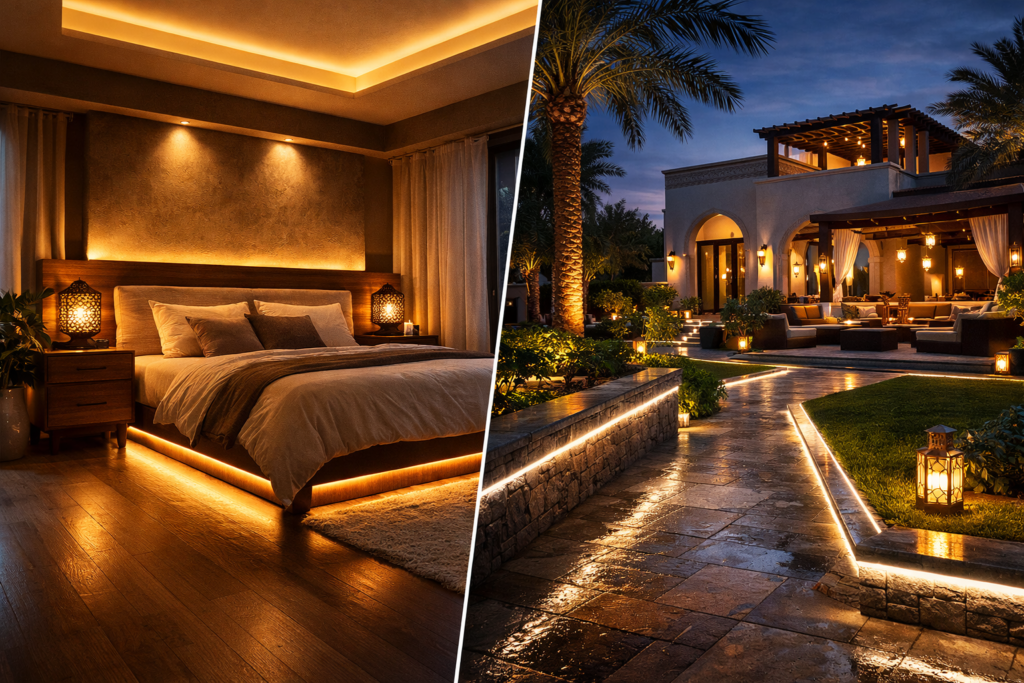
When selecting LED strip lights, the IP rating is just the starting point.
You also need to consider how the strip will behave over time.
Voltage plays a role in performance—24V systems tend to be more stable over longer runs, making them ideal for larger installations. Brightness matters depending on whether you’re creating ambiance or functional lighting.
And in outdoor setups, the quality of waterproof sealing becomes critical. A well-coated IP67 strip will last significantly longer than a poorly sealed one, even if both carry the same rating.
In many high-end projects across Qatar, aluminum profiles are also used—not just for aesthetics, but to manage heat and improve durability.
Frequently Asked Questions
Can IP67 LED strip lights be used indoors?
Yes, they can—but unless moisture protection is needed, IP20 is usually the more practical choice.
Are waterproof LED strips fully submersible?
IP67 strips can handle splashes and temporary water exposure, but they are not designed for continuous underwater use.
What happens if IP20 LED strip lights get wet?
Even minor exposure can damage the circuit, leading to flickering or complete failure.
Which type lasts longer in Qatar weather?
For outdoor conditions, IP67 LED strip lights last significantly longer due to their protective design.
Is IP67 worth the extra cost?
For outdoor or humid environments, absolutely. Indoors, it’s often unnecessary.
Lighting That Lasts Starts With the Right Choice
In the end, the decision between IP20 LED strip lights and IP67 LED strip lights isn’t about which one is better—it’s about which one is right for your environment.
Indoor spaces demand flexibility, efficiency, and clean installation—this is where IP20 excels.
Outdoor spaces demand durability, protection, and resilience—this is where IP67 becomes essential.
In Qatar, where the environment is both beautiful and demanding, making the right choice ensures your lighting doesn’t just look good on day one—but continues to perform for years.
If you’re planning your next lighting project, take a moment to think beyond design.
Think about where your light will live.
Explore our range of IP-rated LED strip lights and choose a solution built for your space, your climate, and your lifestyle.