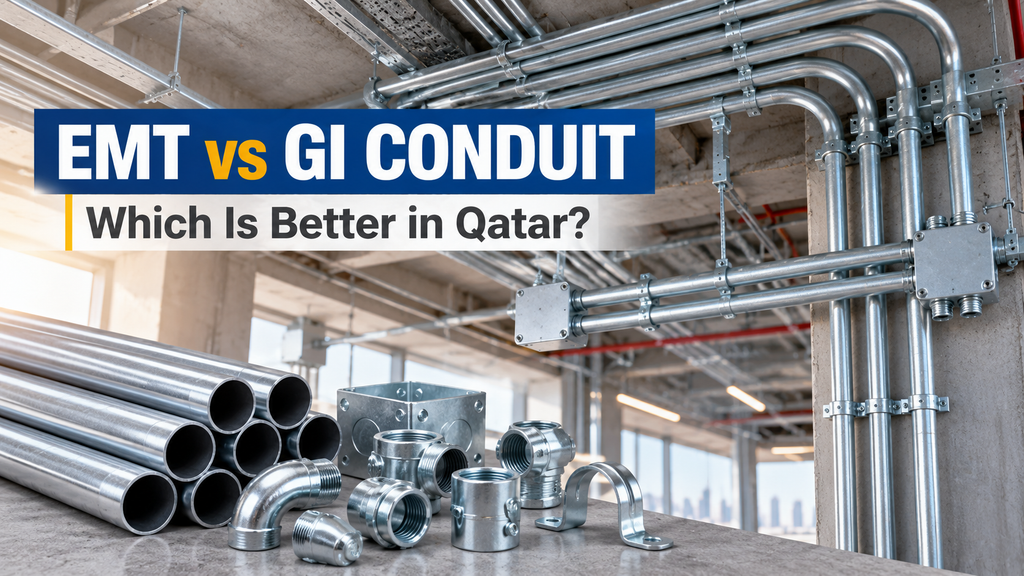
When planning an electrical installation, choosing the correct conduit system is important for protecting wiring and supporting a reliable installation.
Two terms commonly encountered in electrical projects are EMT conduit and GI conduit. Although both relate to metallic conduit systems, they should not automatically be treated as identical products.
If you are comparing EMT vs GI conduit in Qatar, this guide explains the key differences, common applications, fittings and factors to consider before selecting conduit for a project.
What Is EMT Conduit?
EMT stands for Electrical Metallic Tubing. It is a metallic raceway used to route and protect electrical conductors.
EMT is commonly selected for commercial, residential and other electrical installations where its characteristics meet the project requirements.
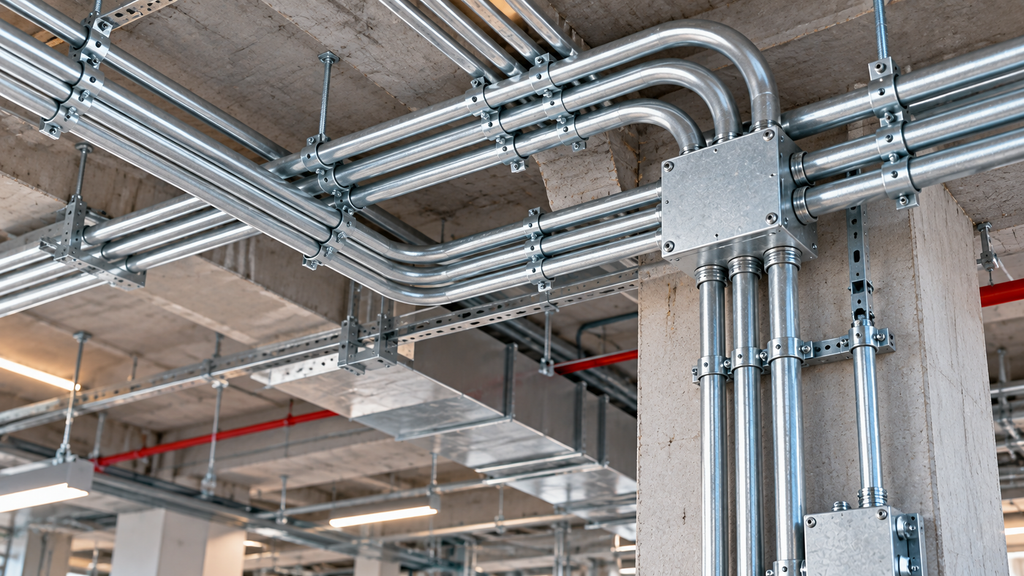
A complete EMT installation may include components such as:
- Connectors
- Couplers
- Bends
- Saddles and straps
- Junction boxes
- Locknuts and related fittings
Correctly matched fittings help create a secure and properly supported conduit system.
What Is GI Conduit?
GI commonly refers to galvanized iron or galvanized metallic conduit products.
The galvanized coating helps protect the underlying metal against corrosion. However, products described as GI conduit can vary in construction, wall thickness, standards and intended applications.
Therefore, buyers should check the actual product specification and applicable project requirements rather than selecting a conduit based only on the term “GI.”
EMT vs GI Conduit: What’s the Difference?
The exact difference depends on the products being compared.
In general, EMT identifies a defined type of electrical metallic tubing, while GI is often used more broadly in the market to describe galvanized metallic conduit.
Here is a simple comparison:
| Factor | EMT Conduit | GI Conduit |
|---|---|---|
| Description | Electrical Metallic Tubing | Common term for galvanized metallic conduit |
| Material protection | Metallic conduit with protective finish/coating as specified | Galvanized surface provides corrosion protection |
| Weight | Depends on specification; EMT is typically relatively lightweight | Depends heavily on conduit type and specification |
| Fittings | EMT-compatible fittings required | Fittings must match the particular conduit system |
| Installation | Common in electrical raceway systems | Depends on the particular GI conduit |
| Selection | Based on electrical/project requirements | Check actual product standard and specification |
The key point is that “GI conduit” is not always a precise substitute for EMT. Always verify the product’s specifications.
EMT vs GI Conduit for Qatar Projects
Qatar projects can include villas, commercial buildings, offices, retail developments, industrial facilities and large MEP installations.
The appropriate conduit depends on factors such as:
installation environment, project specifications, applicable standards, exposure conditions and the electrical system design.
For example, a conduit installed inside a protected commercial building may have different requirements from a metallic conduit installed in a more demanding environment.
Therefore, don’t choose between EMT and GI based only on price.
Which Conduit Is Better for Indoor Installations?
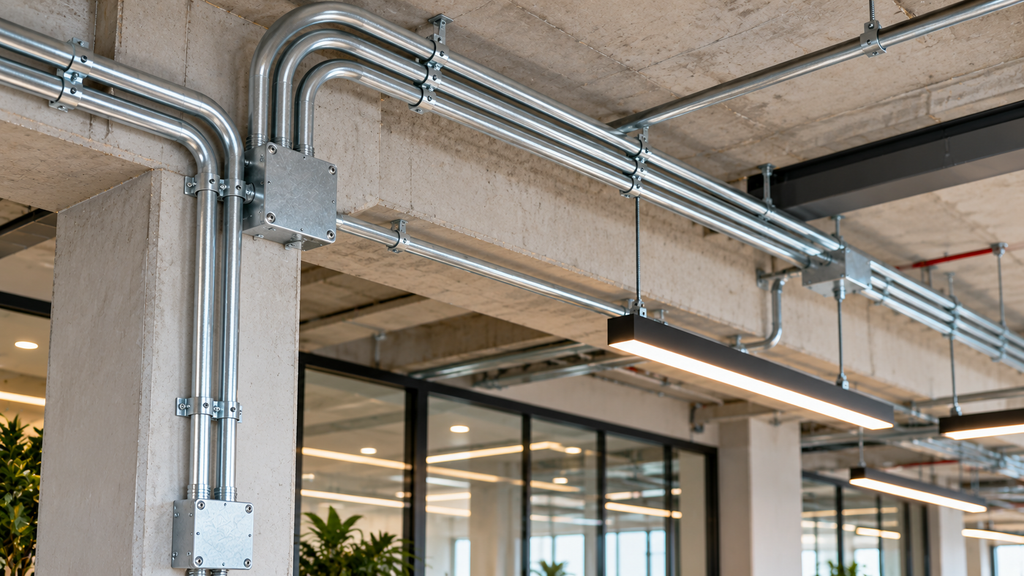
EMT is commonly used in many indoor electrical installations when permitted by the project’s specifications and applicable requirements.
Potential applications include:
- Offices
- Commercial buildings
- Retail spaces
- Service areas
- Electrical rooms
- Other protected building areas
Its suitability still depends on the specific product and installation requirements.
Which Conduit Is Better for Outdoor Installations?
Outdoor selection requires additional consideration.
Exposure to moisture, dust, heat and other environmental conditions can affect the conduit system.
The correct conduit and fittings should therefore be selected according to the project’s environmental conditions and specifications.
A galvanized finish can provide corrosion protection, but that does not mean every GI product is automatically suitable for every outdoor installation.
The complete system—including fittings, boxes, seals and supports—should be considered.
What About Corrosion Resistance?
Corrosion resistance is an important consideration when selecting metallic conduit.
However, you shouldn’t compare corrosion performance using the terms EMT and GI alone.
Actual performance depends on factors such as:
- Base material
- Protective coating
- Coating thickness and quality
- Product standard
- Installation environment
- Exposure conditions
- Installation workmanship
For demanding environments, use products specifically approved or specified for those conditions.
EMT and GI Conduit Accessories
A conduit installation is more than the pipe itself.
You may also need connectors, couplers, bends, saddles, locknuts, boxes and other conduit accessories.
These components need to match the conduit type and size.
For a detailed explanation of common EMT fittings, read our EMT conduit accessories buying guide in Qatar.
How to Choose Between EMT and GI Conduit
Instead of asking only which conduit is “better,” determine which conduit is appropriate for the specific installation.
1. Check the Project Specification
Start with the project’s electrical and MEP specifications.
If a particular conduit type, standard or manufacturer specification is required, follow those requirements.
2. Consider the Installation Environment
Determine whether the conduit will be installed in a protected indoor location or a more demanding environment.
Environmental exposure can affect material and coating requirements.
3. Check Conduit Size
Select the conduit size according to the electrical design and applicable requirements.
Don’t choose a conduit simply because the cables physically fit inside it.
4. Check the Fittings
Make sure connectors, couplers, bends, boxes and supports are compatible with the selected conduit system.
5. Consider Installation Requirements
Routing, bending, support spacing, accessibility and installation method can influence product selection.
6. Check Applicable Standards
The conduit and accessories should meet the standards and specifications required for the project.
EMT vs GI Conduit for MEP Projects
MEP projects often require large quantities of conduit and accessories across different areas of a building.
This makes consistency particularly important.
Contractors and project teams should verify the required:
conduit type → size → fittings → boxes → supports → project specification
before ordering.
Planning the entire conduit system can help reduce incompatible components and unnecessary installation problems.
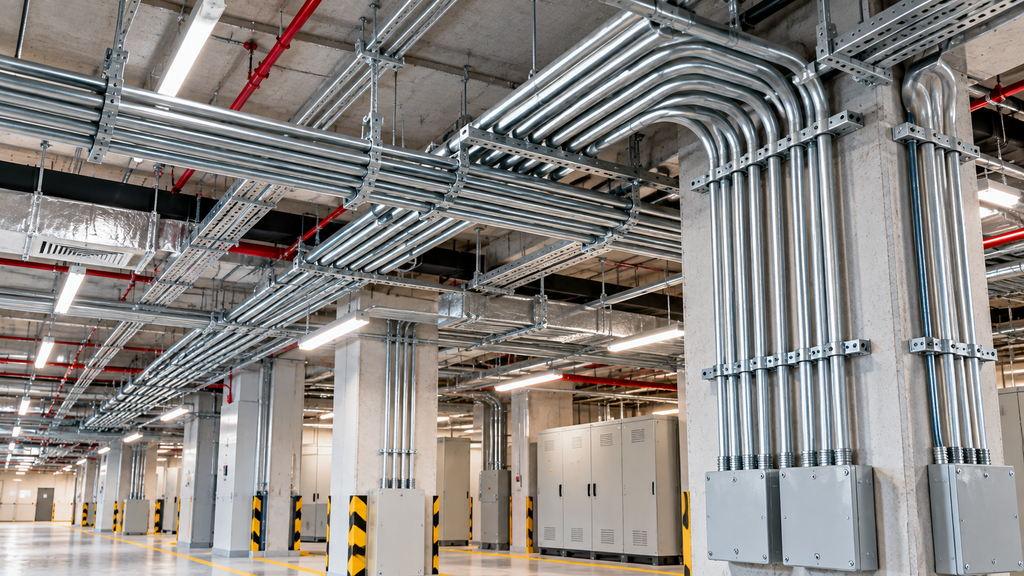
Standards for Electrical Conduit Systems
Electrical conduit products and installations may be subject to project specifications and applicable electrical standards.
For industry information about electrical products and standards, you can refer to the National Electrical Manufacturers Association (NEMA).
Where to Buy EMT & GI Conduit in Qatar
LED ON Trading supplies conduit products and accessories for electrical and MEP project requirements in Qatar.
Before ordering, confirm the required conduit type, size, fittings and project specifications.
You can explore available EMT, GI conduits & accessories in Qatar to identify products for your electrical installation.
Frequently Asked Questions
What is the difference between EMT and GI conduit?
EMT means Electrical Metallic Tubing. GI is commonly used as a broader market term for galvanized metallic conduit. The exact differences depend on the specific products, construction and applicable standards.
Is EMT conduit galvanized?
EMT products commonly have protective coatings or finishes, but the exact construction and coating should be confirmed from the manufacturer’s product specifications.
Is GI conduit suitable for outdoor use?
It depends on the specific conduit, coating, fittings, environmental exposure and project requirements. A galvanized finish alone should not be treated as confirmation that a product is suitable for every outdoor application.
Which is better, EMT or GI conduit?
Neither is universally better. The correct choice depends on the installation environment, product specifications, required standards and project requirements.
What accessories are required for EMT conduit?
Depending on the installation, common accessories include connectors, couplers, bends, saddles, locknuts, boxes and supports.
Where can I buy EMT and GI conduit accessories in Qatar?
LED ON Trading supplies conduit products and accessories for electrical and MEP project requirements in Qatar.
For more information about available conduit sizes and factors affecting cost, read our GI Conduit Pipe Sizes and Prices in Qatar guide.