
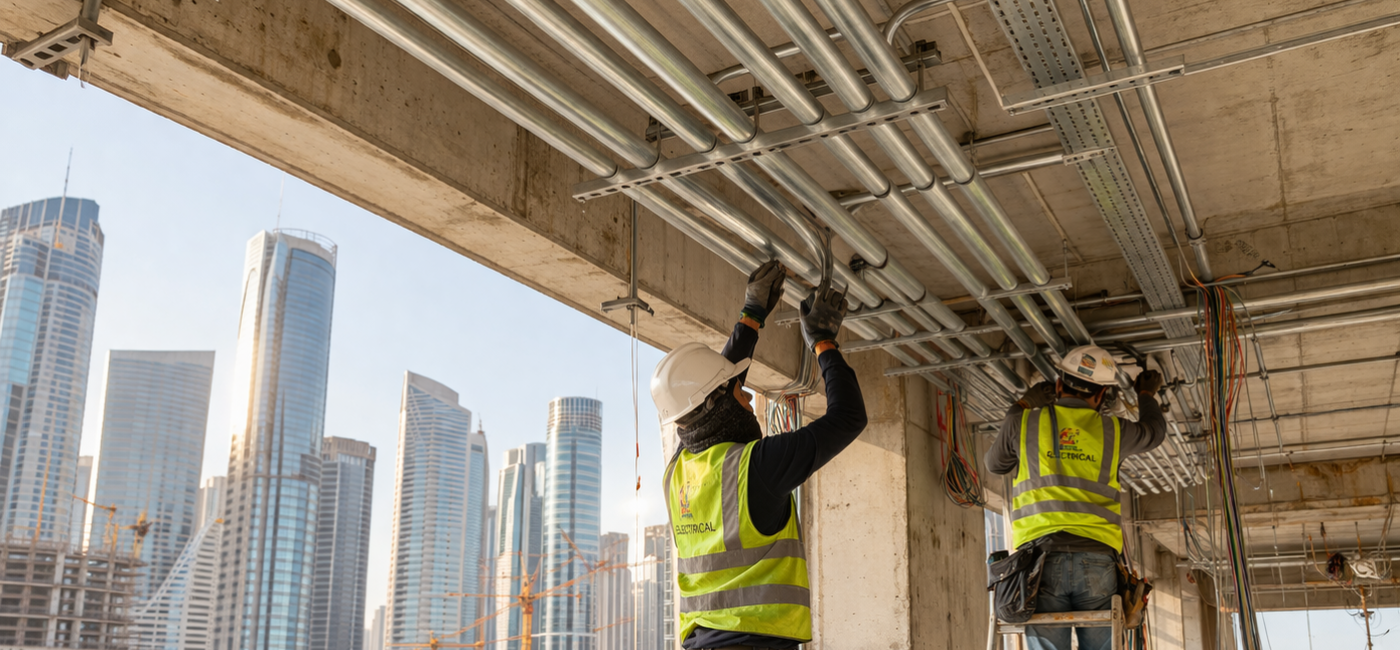
In Qatar’s rapidly evolving construction landscape, electrical systems are expected to perform flawlessly under demanding conditions. Whether it’s a high-rise tower in West Bay, a logistics hub in Ras Laffan, or a retail complex in Al Wakrah, one thing remains constant—reliable cable protection is critical.
This is where EMT GI Conduits come into the picture.
At first glance, conduits may seem like simple metal pipes. But in reality, they play a much deeper role. They carry electrical cables safely, support structural loads, and protect wiring from harsh environmental conditions. In a country like Qatar, where heat, humidity, and dust are constant challenges, the importance of choosing the right conduit system cannot be overstated.
In this article, we’ll take a closer look at how EMT GI conduits handle load capacity and provide mechanical protection, and why these factors matter so much in real-world projects across Qatar.
What Are EMT GI Conduits?
EMT GI conduits, also known as Electrical Metallic Tubing made from galvanized iron, are widely used in electrical installations. They are designed to route and protect electrical wiring while offering a balance between strength and ease of installation.
Unlike heavier rigid conduits, EMT conduits are lighter and easier to handle on-site. This makes them a preferred choice for fast-paced construction environments like those in Qatar.
The galvanized coating on these conduits plays a key role. It protects the metal from corrosion, which is especially important in areas exposed to humidity or moisture. This is one of the reasons why EMT conduit Qatar solutions are commonly specified in both indoor and semi-exposed applications.
You’ll typically see these conduits used in commercial buildings, hospitals, hotels, and even industrial facilities. Their clean finish also makes them suitable for exposed installations where appearance matters.
Understanding Load Capacity in EMT GI Conduits
When we talk about load capacity, we are referring to the ability of a conduit to تحمل weight and stress without losing its shape or strength.
In simple terms, load capacity answers a very practical question:
Can this conduit handle the cables and conditions it will face over time?
In real construction scenarios, EMT GI conduits are subjected to multiple types of loads. Inside the conduit, there are electrical cables, often bundled together. The more cables you add, the heavier the internal load becomes.
But that’s only part of the story.
Externally, conduits may be fixed to ceilings, walls, or structural elements. They may experience pressure from building materials or equipment installed nearby. In industrial settings, vibrations from machinery can also add stress over time.
Then there’s the environmental factor. Qatar’s high temperatures can cause materials to expand. Over time, this expansion and contraction can affect the structural integrity of the conduit system.
If the conduit is not strong enough to handle these combined stresses, it can start to bend, sag, or even deform. This not only affects the conduit itself but also puts the cables inside at risk.
What Is Mechanical Protection in Conduit Systems?
While load capacity is about strength, mechanical protection is about safety.
Electrical cables are not designed to be exposed. They need a protective barrier to shield them from physical damage and environmental exposure. This is exactly what GI conduits provide.
Mechanical protection means safeguarding cables from impacts, abrasion, moisture, and even accidental contact during maintenance or construction activities.
In a busy construction site in Doha, for example, it’s common to have multiple trades working at the same time. Without proper protection, cables can easily get damaged by tools, equipment, or even foot traffic.
Over time, even small damage can lead to serious electrical faults.
That’s why electrical conduits Qatar standards place strong emphasis on proper conduit selection and installation. The conduit is not just a pathway—it’s a protective system.
Why Load Capacity Matters in Qatar Projects
Qatar’s environment adds a unique layer of complexity to electrical installations.
Temperatures can rise above 45°C during summer. In coastal areas, humidity levels are high. Dust and sand are constant, especially in open or developing areas.
All these factors put additional stress on conduit systems.
Imagine a large commercial building where multiple cable runs are installed above a false ceiling. The space is enclosed, heat builds up, and airflow is limited. Over time, the weight of the cables combined with thermal stress can cause weaker conduits to sag.
This doesn’t just look bad—it creates long-term maintenance issues.
In industrial projects, the situation can be even more demanding. Conduits may be exposed to vibrations, heavy-duty operations, and continuous usage.
In such conditions, selecting high-quality EMT GI conduits with proper load capacity is not optional—it’s essential.
How EMT GI Conduits Provide Mechanical Protection
One of the key strengths of EMT GI conduits lies in how they combine material quality with practical design.
The galvanized coating acts as the first line of defense. It protects the steel from corrosion, which is particularly important in humid environments or areas exposed to moisture.
Inside the conduit, the surface is smooth. This reduces friction when pulling cables, which helps prevent damage during installation. It also makes future cable replacements easier.
Structurally, EMT conduits are designed to resist moderate impact and pressure. While they are lighter than rigid steel conduits, they still provide sufficient protection for most commercial and industrial applications.
Another important factor is how these conduits are connected. With the help of proper EMT accessories, such as couplings and connectors, the system becomes continuous and secure. This ensures that there are no weak points where damage can occur.
Factors Affecting Strength of EMT GI Conduits
The strength of an EMT GI conduit system is influenced by several factors, and understanding these can help you make better decisions during design and procurement.
The quality of the base material is one of the most important aspects. High-grade steel offers better durability and resistance to bending or deformation. On the other hand, lower-quality materials may look similar but perform poorly under stress.
Wall thickness also plays a major role. Thicker conduits naturally provide higher strength and load capacity. However, they may be slightly more difficult to bend and install, so a balance is needed based on the project requirements.
The quality of galvanization is another critical factor. A well-coated conduit will resist rust and maintain its strength over time, even in challenging environments.
Installation practices cannot be ignored. Even the best conduit will fail if it is not installed correctly. Poor support spacing, improper bending, or loose fittings can all reduce the overall strength of the system.
Finally, how the load is distributed within the conduit matters. Overloading a single conduit with too many cables can create stress points, leading to long-term issues.
Role of EMT Accessories in Strength and Protection
It’s easy to focus only on the conduit itself, but the overall system is only as strong as its weakest component. This is where EMT accessories come in.
Accessories such as connectors, couplings, elbows, and clamps play a crucial role in maintaining the integrity of the conduit system.
When high-quality accessories are used, they ensure that connections are tight and secure. This prevents movement, reduces stress on joints, and maintains alignment לאורך the conduit run.
On the other hand, poor-quality accessories can lead to loose connections, gaps, and even corrosion at joint points. Over time, these small issues can turn into major problems.
For projects in Qatar, where reliability is key, using certified and compatible accessories is a smart investment.
Common Mistakes That Reduce Conduit Strength
Even with the right materials, certain mistakes can compromise the performance of EMT GI conduits.
One common issue is overloading the conduit with too many cables. While it may seem efficient in the short term, it increases internal stress and reduces the lifespan of the system.
Improper bending is another frequent problem. Sharp or uneven bends weaken the structure of the conduit and can damage cables during installation.
Support spacing is often overlooked. When conduits are not properly supported, they tend to sag over time, especially under heavy loads.
Using low-quality materials to cut costs is another mistake that can backfire. In Qatar’s demanding environment, durability should always be a priority.
Ignoring environmental conditions, such as heat and humidity, can also lead to premature failure.
Practical Tips for Buyers and Contractors in Qatar
For professionals working in Qatar, selecting the right EMT conduit Qatar solutions requires careful consideration.
It’s important to evaluate not just the price, but the overall quality and suitability of the product for the project environment.
Contractors should pay close attention to installation practices, ensuring proper support, correct bending techniques, and secure connections.
Engineers should design systems based on realistic load conditions, taking into account both current and future requirements.
Procurement teams should work with trusted suppliers who can provide certified products that meet local standards.
A well-planned conduit system may cost slightly more upfront, but it will save significant time and money in the long run by reducing maintenance and avoiding failures.
Real Use Cases in Qatar
Across Qatar, GI conduits are used in a wide range of applications.
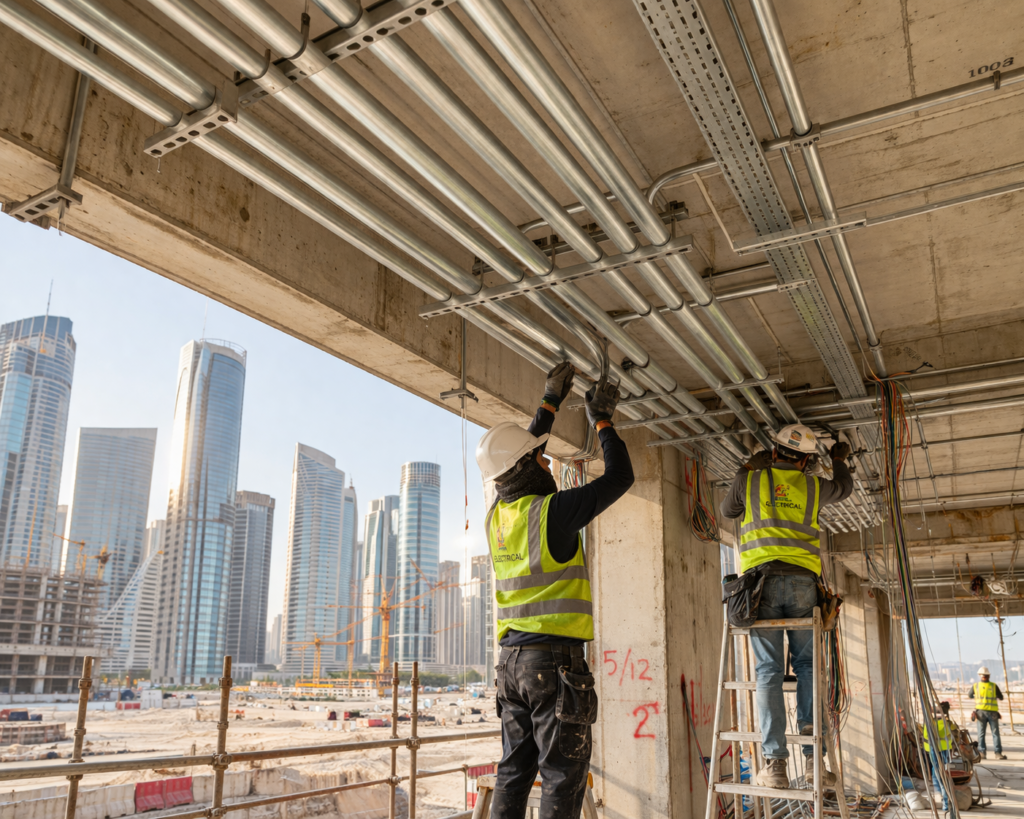
In commercial buildings, they are commonly installed above ceilings and داخل walls, where they carry multiple cable runs efficiently.
In industrial facilities, they provide protection in environments where durability is critical due to heavy operations and constant usage.
Infrastructure projects, such as roads and public utilities, rely on conduits that can withstand outdoor exposure and harsh weather conditions.
Each of these applications highlights the importance of choosing the right conduit system based on load capacity and mechanical protection.
In today’s construction environment, EMT GI conduits are far more than just cable carriers. They are a key part of ensuring electrical safety, system reliability, and long-term performance.
Understanding load capacity helps you select conduits that can handle real-world stresses. At the same time, strong mechanical protection ensures that cables remain safe from damage caused by environmental and physical factors.
In Qatar, where conditions are tough and expectations are high, these factors become even more critical.
By focusing on quality materials, proper installation, and reliable EMT accessories, contractors and engineers can build conduit systems that stand the test of time.
The bottom line is simple:
Choosing the right EMT GI conduits today means fewer problems, lower costs, and better performance tomorrow.
Frequently Asked Questions (FAQs)
1. What makes EMT GI conduits suitable for projects in Qatar?
EMT GI conduits are well-suited for Qatar because they offer a strong combination of durability and ease of installation. The galvanized iron coating helps protect against corrosion, which is important in humid coastal areas like Doha and Al Wakrah.
At the same time, their lightweight structure makes them easier to handle on-site, especially in fast-track construction projects. When installed correctly, they can withstand high temperatures and dusty conditions commonly found in Qatar.
2. How much load can EMT GI conduits typically handle?
The load capacity of EMT GI conduits depends on factors such as wall thickness, material quality, and installation method. In general, they are designed to handle the weight of multiple electrical cables along with moderate external stress.
However, in real projects, issues arise when conduits are overloaded with too many cables or installed without proper support spacing. For Qatar projects, it’s always best to calculate load requirements during the design stage rather than relying on standard assumptions.
3. Are EMT GI conduits strong enough for industrial applications?
Yes, EMT GI conduits can be used in many industrial environments, but it depends on the level of exposure and mechanical stress.
In light to medium industrial settings—such as warehouses or processing units—they perform well. However, in heavy-duty areas with high impact, vibration, or extreme conditions, engineers may prefer thicker or rigid conduit systems.
The key is to match the conduit type with the actual working conditions rather than using a one-size-fits-all approach.
4. How do EMT GI conduits protect cables from damage?
EMT GI conduits act as a physical barrier around electrical cables. They prevent direct exposure to impacts, abrasion, and environmental elements like dust and moisture.
In busy construction environments in Qatar, cables can easily be damaged by tools, equipment, or ongoing work. The conduit absorbs this external stress, keeping the cables inside safe and functional over time.
5. Do EMT GI conduits rust in Qatar’s climate?
High-quality EMT GI conduits are designed to resist rust due to their galvanized coating. This coating creates a protective layer that prevents moisture from reaching the base metal.
However, the quality of galvanization matters. Poor-quality conduits may start to corrode over time, especially in humid or outdoor conditions. This is why sourcing from reliable suppliers in Qatar is important.
6. What role do EMT accessories play in conduit performance?
EMT accessories are essential for maintaining the strength and continuity of the conduit system. Components like couplings, connectors, and clamps ensure that all sections are securely joined and properly aligned.
If low-quality accessories are used, joints may become weak points. Over time, this can lead to misalignment, gaps, or even system failure. In short, even the best conduit cannot perform well without proper accessories.
7. Can EMT GI conduits be used outdoors in Qatar?
Yes, but with some considerations.
While EMT GI conduits have corrosion resistance, outdoor installations in Qatar expose them to intense sunlight, heat, and dust. In such cases, additional protective measures or coatings may be recommended.
For fully exposed outdoor environments, engineers often evaluate whether EMT is sufficient or if a more heavy-duty conduit is needed.
8. What are the most common installation mistakes to avoid?
Several common mistakes can reduce the strength and lifespan of EMT GI conduits:
- Overloading the conduit with too many cables
- Improper bending that weakens the structure
- Poor support spacing causing sagging
- Using incompatible or low-quality accessories
In Qatar’s demanding conditions, even small installation errors can lead to long-term issues, so attention to detail is critical.
9. How do I choose the right EMT conduit supplier in Qatar?
Choosing the right supplier is not just about price. You should look for:
- Certified and standards-compliant products
- Consistent material quality
- Availability of matching EMT accessories
- Proven experience in Qatar projects
A reliable supplier will also provide technical support, which can be very helpful during large or complex installations.
10. Are EMT GI conduits cost-effective for large projects?
Yes, they are considered cost-effective for many commercial and residential projects in Qatar.
Their lower installation time, ease of handling, and adequate strength make them a practical choice. However, cost-effectiveness should always be evaluated alongside performance. Using cheaper, low-quality conduits may reduce upfront cost but increase maintenance and replacement expenses later.
11. How does temperature affect EMT GI conduit performance?
High temperatures, like those in Qatar, can cause expansion in metal conduits. Over time, repeated expansion and contraction can affect alignment and connections if not properly installed.
This is why proper spacing, secure fittings, and allowance for thermal movement are important during installation.
12. When should I choose EMT GI conduits over other types?
EMT GI conduits are ideal when you need:
- A balance between strength and flexibility
- Faster installation
- Cost-effective solutions for large buildings
- Clean and professional-looking exposed installations
For heavier-duty or highly exposed environments, other conduit types may be considered, but EMT remains a reliable choice for most standard applications in Qatar