
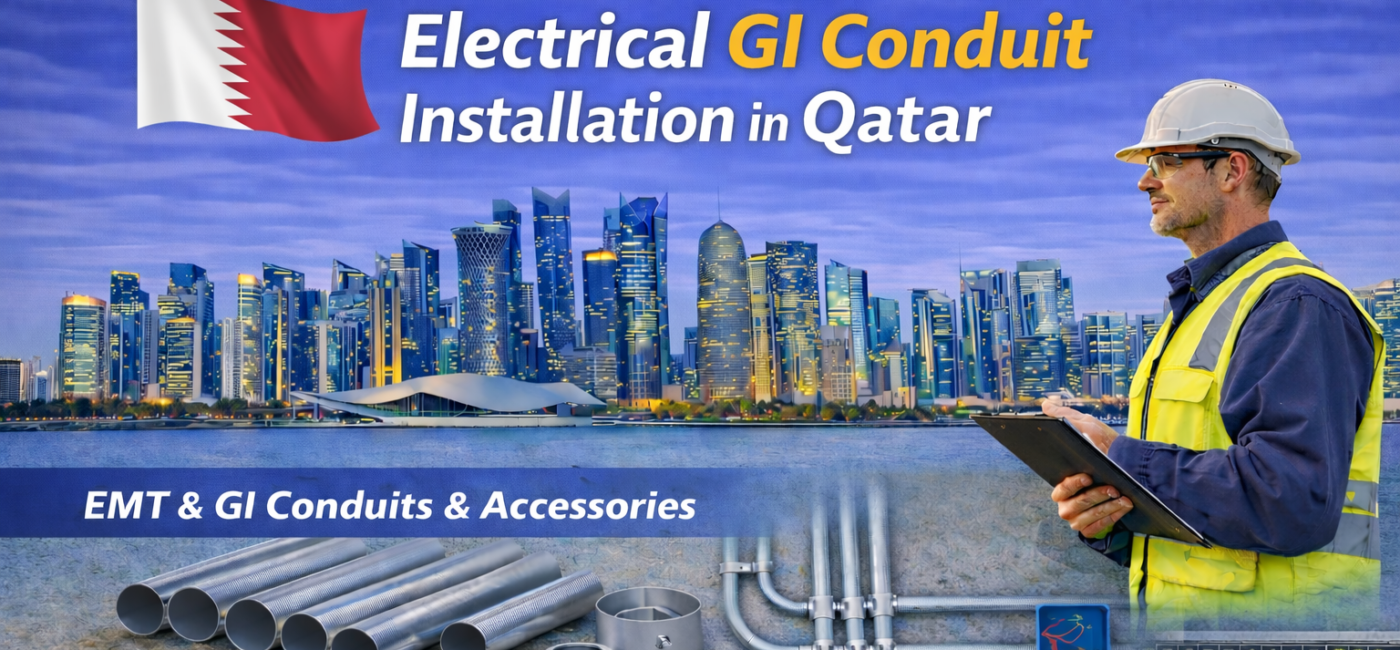
Electrical infrastructure plays a critical role in modern construction projects. Whether it is a residential building, commercial complex, or industrial facility, electrical wiring systems must be protected from damage, environmental exposure, and safety hazards. This is where conduit systems become essential.
In Qatar’s construction industry, EMT and GI conduits & accessories in Qatar are widely used to safeguard electrical cables and ensure long-term reliability of electrical installations. These conduit systems provide mechanical protection, improve cable management, and help maintain compliance with electrical regulations.
Because of Qatar’s demanding climate conditions, including high temperatures, humidity, and coastal environments, electrical installations must follow strict safety standards. Contractors and engineers must ensure that conduit installations comply with Qatar Construction Specifications (QCS), Kahramaa electrical regulations, and international standards such as IEC and British Standards.
This guide provides a comprehensive overview of GI conduit installation practices, EMT conduit usage, electrical safety guidelines, and regulatory requirements in Qatar. Whether you are an electrical contractor, project engineer, consultant, or procurement professional, understanding these standards can help ensure safe, compliant, and durable electrical installations.
Understanding EMT & GI Conduits
Electrical conduit systems are designed to protect electrical cables and wiring while allowing safe routing through buildings and infrastructure. In Qatar, two commonly used metallic conduit systems are Electrical Metallic Tubing (EMT) and Galvanized Iron (GI) conduits.
These conduits are essential components of electrical cable management systems, ensuring that wiring is properly protected from physical damage, moisture, and environmental conditions.
What is EMT Conduit?
Electrical Metallic Tubing (EMT) is a thin-walled metal conduit that is commonly used in commercial and residential electrical installations. EMT conduits are typically made from galvanized steel or aluminum and are known for their lightweight structure and ease of installation.
Unlike rigid conduit systems, EMT conduits are easier to bend and install, making them ideal for indoor electrical applications.
EMT conduits are commonly used in:
• Commercial office buildings
• Shopping malls and retail stores
• Residential apartment buildings
• Hospitals and educational facilities
Because EMT conduits are lightweight, they allow electricians to quickly route cables through walls, ceilings, and structural frameworks.
What are GI Conduits?
GI conduits, or Galvanized Iron conduits, are steel conduits coated with zinc to prevent corrosion. The galvanization process protects the metal surface from rust and environmental degradation.
GI conduits are widely used in Qatar because of their strength and durability. They provide superior mechanical protection compared to EMT conduits and are suitable for both indoor and outdoor electrical installations.
GI conduits are typically used in:
• Industrial buildings
• Infrastructure projects
• Outdoor electrical systems
• Underground cable routing
Due to their strong construction, GI conduits are often preferred for projects that require long-term durability and enhanced cable protection.
Importance of EMT & GI Conduits in Qatar Construction
Qatar’s construction sector is one of the most advanced in the Middle East, with continuous development of infrastructure, transportation networks, commercial towers, and residential communities. Electrical installations in these projects must be reliable, safe, and compliant with regulatory standards.
The use of EMT, GI conduits & accessories in Qatar plays a vital role in ensuring safe electrical systems across construction projects.
Protection Against Mechanical Damage
Electrical cables are vulnerable to physical damage during construction activities. Without conduit protection, cables may be exposed to impact, pressure, or abrasion.
Conduits provide a protective barrier that shields electrical wiring from construction equipment, structural movement, and environmental exposure.
Cable Organization and Management
Large construction projects involve complex electrical networks with hundreds of cables running throughout the building. Conduit systems help organize these cables efficiently and ensure proper routing through walls, ceilings, and service shafts.
This organized cable management system simplifies maintenance and troubleshooting in the future.
Resistance to Environmental Conditions
Qatar’s climate presents unique challenges for electrical installations. High temperatures, humidity, and coastal conditions can accelerate corrosion and material degradation.
GI conduits offer excellent resistance to corrosion due to their galvanized coating, making them suitable for harsh environmental conditions.
Compliance with Electrical Regulations
Electrical installations in Qatar must comply with strict safety standards. Using approved conduit systems ensures that projects meet the requirements of QCS and Kahramaa regulations.
Key benefits of conduit systems include:
• Improved electrical safety
• Long-term durability
• Better cable protection
• Compliance with regulatory standards
QCS & Kahramaa Electrical Standards
Electrical installations in Qatar are governed by several regulatory authorities and standards. These regulations ensure that electrical systems meet safety, performance, and quality requirements.
Qatar Construction Specifications (QCS)
QCS provides detailed guidelines for construction materials, electrical systems, installation procedures, and quality assurance. Contractors must ensure that all electrical components, including conduits and accessories, comply with QCS standards.
QCS requirements typically cover:
• Approved conduit materials
• Installation methods
• Cable routing practices
• Inspection procedures
• Electrical safety requirements
These specifications ensure that electrical infrastructure meets the highest quality standards.
Kahramaa Electrical Regulations
Kahramaa (Qatar General Electricity and Water Corporation) is responsible for regulating electrical installations in the country. All electrical systems must comply with Kahramaa’s safety requirements before they are connected to the national electricity network.
Electrical installations are typically inspected by Kahramaa engineers to verify compliance with approved designs and safety regulations.
International Standards
Many projects in Qatar also follow internationally recognized standards, including:
• IEC electrical standards
• BS EN 61386 conduit systems
• BS 4568 steel conduit specifications
• International cable management standards
These standards ensure compatibility with global engineering practices and improve the reliability of electrical installations.
GI Conduit Installation Guidelines
Proper installation of GI conduits is essential to ensure electrical safety and system durability. Incorrect installation can lead to cable damage, electrical faults, or regulatory violations.
GI conduit installation must follow professional engineering practices and approved construction specifications.
Conduit Sizing
Selecting the correct conduit size is critical to ensure smooth cable installation and proper ventilation.
Common conduit sizes used in Qatar include:
• 20 mm
• 25 mm
• 32 mm
• 40 mm
• 50 mm
The conduit must allow sufficient space for cables to be pulled through without causing insulation damage.
Conduit Bending
During installation, conduits often need to be bent to follow structural pathways. Bending must be done using specialized tools to prevent deformation.
Important guidelines include:
• Use approved bending equipment
• Avoid excessive bending angles
• Maintain smooth internal conduit surfaces
Proper bending ensures that cables can be installed without difficulty.
Conduit Support
GI conduits must be securely supported to prevent sagging or misalignment. Supports should be installed at regular intervals along walls or ceilings.
Common support methods include:
• Conduit clamps
• Saddle supports
• Strut channels
Secure fixing improves installation quality and structural stability.
EMT Installation Guidelines
EMT conduit installation requires careful planning and proper accessories to ensure safe electrical routing.
Because EMT conduits are thinner and lighter than GI conduits, they are commonly used in indoor electrical installations.
Key installation guidelines include:
• Use appropriate connectors and couplings
• Ensure secure conduit mounting
• Maintain proper cable spacing inside conduits
EMT conduits are commonly installed in:
• Suspended ceilings
• Wall cavities
• Surface-mounted cable systems
These installations provide flexible routing options while maintaining cable protection.
Conduit Accessories Used in Qatar
Conduit accessories are essential components that allow conduit systems to function effectively. Without these accessories, it would be impossible to connect conduit sections or secure them properly.
Common conduit accessories include:
• Conduit couplings
• Elbows and bends
• Junction boxes
• Locknuts and bushings
• Conduit saddles
Each accessory plays a specific role in ensuring safe and efficient cable routing.
For example, junction boxes provide access points for cable connections, while bushings protect cable insulation from sharp conduit edges.
Safety Practices for Conduit Installation
Electrical safety must always be a top priority during conduit installation.
Proper installation techniques help reduce the risk of electrical faults, equipment damage, and fire hazards.
Important safety practices include:
• Proper grounding of conduit systems
• Avoiding overcrowded conduits
• Protecting conduits from corrosion
• Conducting regular inspections
These safety measures ensure that electrical systems operate reliably and safely over time.
Common GI Conduit Installation Mistakes
Even experienced installers can make mistakes during conduit installation. Avoiding these errors helps improve system performance and safety.
Common mistakes include:
• Incorrect conduit sizing
• Poor conduit bending
• Inadequate support spacing
• Improper earthing connections
Regular supervision and quality control inspections can help prevent these issues.
Choosing EMT & GI Conduit Suppliers in Qatar
Selecting reliable suppliers is essential for ensuring high-quality electrical installations.
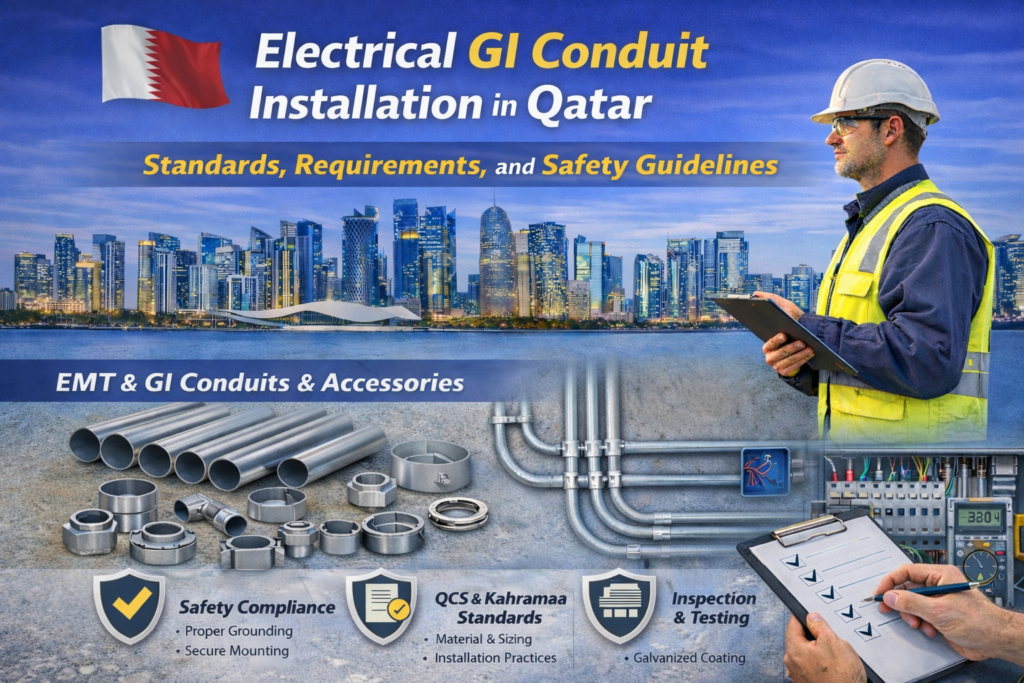
Contractors should work with trusted suppliers who provide certified EMT, GI conduits & accessories in Qatar that meet local and international standards.
When choosing a supplier, consider:
• Compliance with QCS and IEC standards
• Product durability and corrosion resistance
• Availability of complete conduit accessories
• Reputation in the construction industry
Working with experienced suppliers ensures that electrical materials meet project requirements and safety standards.
Conclusion
Electrical conduit systems are essential components of modern construction projects. The use of EMT, GI conduits & accessories in Qatar ensures safe cable management, reliable electrical installations, and compliance with regulatory standards.
By following proper installation practices, selecting high-quality materials, and adhering to QCS and Kahramaa regulations, contractors and engineers can create electrical systems that deliver long-term performance and safety.
Whether used in residential buildings, commercial complexes, or industrial facilities, properly installed conduit systems help protect electrical infrastructure and support the growing construction sector in Qatar.