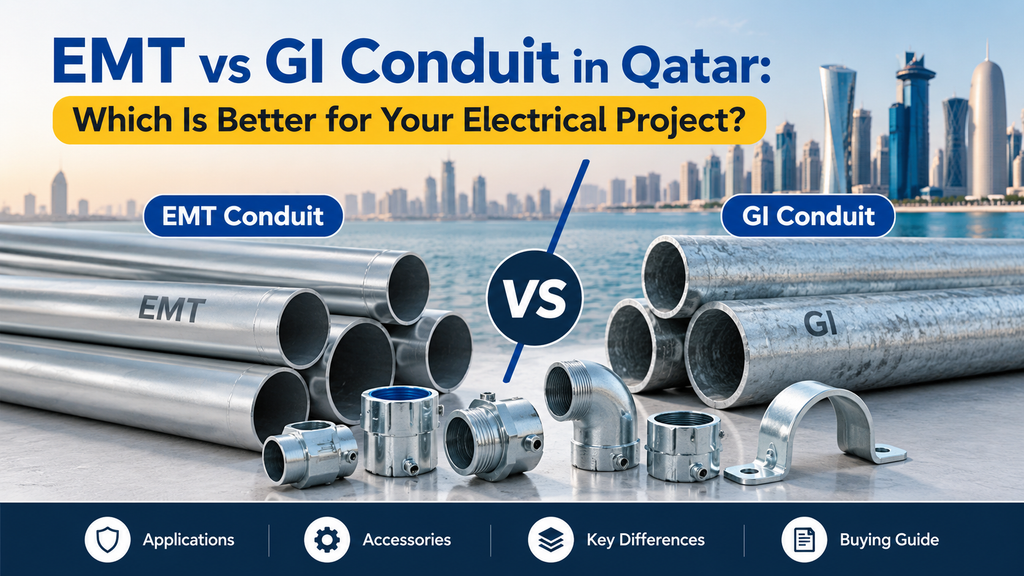
EMT & GI Conduits & Accessories in Qatar
Choosing the right electrical conduit is important for a safe and reliable electrical installation. Contractors, electricians, and MEP professionals use conduits to route and protect electrical wiring.
However, not every project needs the same type of conduit. The installation area, conduit size, fittings, and level of protection can affect your choice.
If you are looking for EMT, GI conduits & accessories in Qatar, this guide will help you understand the main differences and choose suitable products for your project.
What Is EMT Conduit?
EMT stands for Electrical Metallic Tubing. Electricians commonly use EMT to route and protect electrical wires.
EMT is lightweight and easy to handle. Therefore, contractors can install it efficiently in many building projects.
Common applications include:
- Commercial buildings
- Offices
- Retail spaces
- Warehouses
- Residential projects
- MEP installations
- Indoor electrical systems
In addition, an EMT installation may require connectors, couplers, saddles, elbows, and other fittings.
What Is GI Conduit?
GI stands for Galvanized Iron. GI conduit provides a strong pathway for electrical cables and helps protect wiring from physical damage.
The galvanized surface also adds protection to the metal. As a result, contractors often choose GI conduit when a project requires a strong and durable conduit system.
Common applications include:
- Commercial developments
- Industrial facilities
- Warehouses
- Infrastructure projects
- MEP projects
- Electrical installations that need strong cable protection
However, always check the project’s specifications before choosing a conduit type.
EMT vs GI Conduit: What’s the Difference?
Both EMT and GI conduits protect and route electrical cables. However, they have different characteristics.
Understanding these differences can help you select the right option.
Weight and Handling
EMT is relatively lightweight. Therefore, electricians can handle, cut, and install it more easily in many applications.
GI conduit can offer a more robust solution. Contractors may choose it when the installation requires greater mechanical protection.
Installation Environment
Contractors commonly use EMT in protected indoor installations. For example, it can suit offices, shops, commercial spaces, and other building projects.
GI conduit can suit more demanding installations. However, the correct choice depends on the project design and environmental conditions.
Accessories
A conduit system needs more than pipes. You also need compatible fittings to connect and secure the system.
Common conduit accessories include:
- Compression connectors
- Compression couplers
- Set screw connectors
- Set screw couplers
- Saddles
- Elbows
- Conduit bends
Using the correct fittings makes installation easier and helps create a secure conduit system.
Want to understand these fittings in more detail? Read our complete EMT conduit accessories buying guide to learn about connectors, couplers, saddles, bends and other common fittings.
How to Choose the Right Electrical Conduit
Before buying conduit materials, check the requirements of your project.
1. Check the Installation Location
First, identify where you will install the conduit.
Is it for an office, warehouse, shop, residential building, or industrial facility?
The location can help determine which conduit type is more suitable.
2. Select the Correct Conduit Size
Next, check the required conduit size.
The correct size depends on the cables and project design. Therefore, review the electrical drawings and specifications before ordering.
Avoid selecting a conduit based only on price or availability.
3. Identify the Required Accessories
Plan the fittings before installation starts.
For example, your project may require connectors, couplers, saddles, elbows, and bends.
Buying the correct accessories with the conduit can also help prevent installation delays.
4. Follow Project Requirements
Always follow approved electrical drawings and project specifications.
In addition, check any applicable electrical requirements or standards before installation.
Organizations such as the National Electrical Manufacturers Association (NEMA) provide information about electrical products and industry standards.
5. Check Product Availability
Product availability also matters for large projects.
Contractors may need several conduit sizes and different accessories. Therefore, sourcing the main components from one supplier can make purchasing easier.
It can also reduce the chance of missing important fittings.
Why Are Quality Conduit Accessories Important?
A reliable conduit installation depends on both the conduit and its accessories.
For example, connectors help join conduit to electrical boxes and equipment. Couplers connect conduit sections together. Saddles help secure conduit along the installation route.
Suitable accessories can help provide:
- Secure cable routing
- Reliable conduit connections
- Better mechanical protection
- Cleaner installations
- Easier maintenance
- Efficient installation
Therefore, consider the complete conduit system when buying materials.
EMT & GI Conduits for Projects in Qatar
Qatar has a wide range of residential, commercial, industrial, and infrastructure projects. Each project can have different electrical requirements.
For this reason, contractors should select conduit products according to the project design and installation conditions.
Choosing suitable EMT, GI conduits & accessories in Qatar can help create an organized electrical containment system.
In addition, selecting compatible fittings can make installation easier and reduce unnecessary delays.
Where to Buy EMT & GI Conduits & Accessories in Qatar
LED ON Trading supplies electrical products for contractors, electricians, MEP professionals, and other customers in Qatar.
Our conduit range includes EMT and GI conduit products. You can also find accessories such as connectors, couplers, saddles, and elbows.
Before ordering, check the required sizes, quantities, and fittings for your project.
Explore our EMT, GI conduits & accessories in Qatar to find suitable conduit products and accessories for your electrical project.
Frequently Asked Questions
What is EMT conduit used for?
Electricians use EMT conduit to route and protect electrical wiring. It is common in commercial buildings, offices, shops, and other electrical installations.
What accessories do I need for EMT conduit?
The accessories depend on the installation. Common options include connectors, couplers, saddles, elbows, and bends.
What is GI conduit used for?
GI conduit provides a strong pathway for electrical wiring. Contractors can use it for projects that require durable cable protection.
What is the difference between EMT and GI conduit?
EMT is generally lightweight and convenient to install. GI conduit can provide a more robust solution for demanding applications. However, project specifications should guide your final choice.
Where can I buy EMT and GI conduits in Qatar?
LED ON Trading supplies EMT and GI conduit products and accessories in Qatar. Check the required sizes and fittings before placing an order.
How do I choose the correct conduit size?
Check the cable requirements, electrical drawings, and project specifications. The correct size depends on the cables and the design of the installation.