

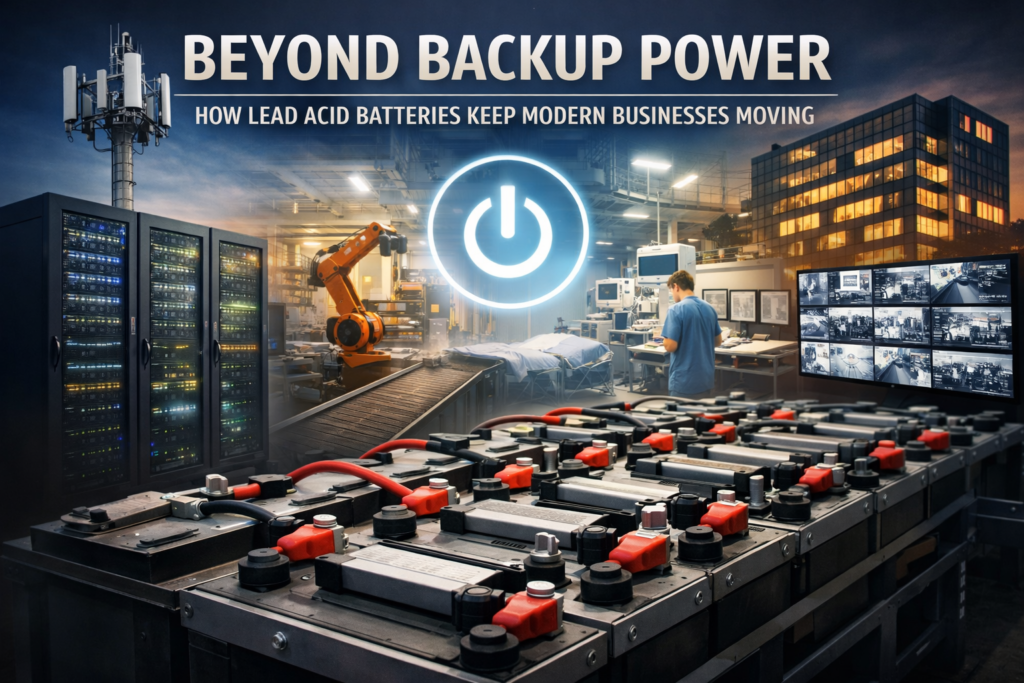
Reliable electricity is the foundation of modern business operations. From manufacturing facilities and data centers to hospitals and commercial buildings, organizations depend on continuous power to keep systems running, employees productive, and customers satisfied.
While many people associate batteries with emergency backup situations, their role in today’s business environment extends much further. Lead Acid Batteries have become an integral component of operational infrastructure, supporting critical systems, protecting valuable equipment, and ensuring uninterrupted performance across a wide range of industries.
For decades, businesses have relied on lead acid battery technology because it offers a practical balance of reliability, affordability, and proven performance. Whether supporting industrial equipment, telecommunications networks, security systems, or backup power installations, these batteries continue to play a vital role in maintaining business continuity and operational resilience.
The Growing Importance of Power Reliability in Business
Power interruptions are no longer minor inconveniences. Even a brief outage can have significant consequences for organizations that depend on digital systems, automated equipment, and continuous communication.
Businesses face several challenges when power reliability is compromised:
- Lost productivity and operational delays
- Data loss and system disruptions
- Equipment damage and repair costs
- Customer dissatisfaction
- Revenue losses from downtime
- Safety risks in critical environments
As organizations become increasingly dependent on technology, maintaining a reliable power infrastructure becomes a strategic priority. Business continuity plans now frequently include robust backup power solutions designed to keep essential operations functioning during unexpected disruptions.
Reliable battery systems provide a critical layer of protection between power failures and business interruption. They help organizations maintain operations long enough to restore primary power sources, activate generators, or safely shut down sensitive systems.
Understanding Lead Acid Battery Technology
Lead acid batteries are among the oldest rechargeable battery technologies still widely used today. Despite the emergence of newer battery chemistries, they continue to serve as a dependable energy storage option for commercial and industrial applications.
At a basic level, lead acid batteries store electrical energy through a chemical reaction between lead plates and an electrolyte solution. When power is required, the stored energy is released to support connected equipment and systems.
Their enduring popularity comes from several practical advantages:
- Proven technology with decades of real-world performance
- High reliability in demanding environments
- Cost-effective deployment
- Strong surge power capabilities
- Established maintenance and recycling infrastructure
Rather than chasing the latest technology trends, many businesses prioritize systems that consistently deliver predictable performance. This is one reason lead acid batteries remain a preferred choice for industrial power backup applications worldwide.
Beyond Backup Power: The Everyday Role of Lead Acid Batteries
Although often associated with emergency power systems, lead acid batteries actively support daily business operations across numerous industries.
Telecommunications
Communication networks must remain operational around the clock. Telecommunications providers rely on industrial batteries to maintain service continuity during utility interruptions.
Lead acid batteries support:
- Cellular towers
- Network infrastructure
- Communication hubs
- Emergency communication systems
Without dependable battery power systems, communication disruptions could impact businesses, emergency services, and consumers alike.
Data Centers
Data centers represent some of the most power-sensitive environments in the world. Even a few seconds of downtime can result in significant financial and operational consequences.
Lead acid batteries work alongside UPS systems to:
- Maintain server availability
- Prevent data loss
- Support uninterrupted network operations
- Bridge power gaps during generator startup
Their ability to deliver immediate power makes them essential for maintaining data center reliability.
Healthcare Facilities
Hospitals and healthcare facilities depend on continuous access to power for patient care and life-support systems.
Battery-backed systems help support:
- Emergency lighting
- Critical medical equipment
- Patient monitoring systems
- Communication infrastructure
- Emergency response operations
In healthcare environments, reliable battery systems contribute directly to safety and service continuity.
Manufacturing Plants
Modern manufacturing operations often run on automated machinery and computerized production systems.
Lead acid batteries help manufacturers by:
- Protecting sensitive equipment
- Preventing production interruptions
- Supporting control systems
- Reducing operational downtime
Maintaining power reliability can significantly improve production efficiency and minimize costly disruptions.
Warehouses and Logistics Centers
Warehouses increasingly depend on technology-driven operations, including inventory systems, automation equipment, and material handling solutions.
Battery systems support:
- Automated storage systems
- Material handling equipment
- Backup power infrastructure
- Security and monitoring systems
Reliable energy storage helps keep supply chains moving even during power disturbances.
Commercial Buildings
Office complexes, retail facilities, and mixed-use developments require dependable power for everyday operations.
Lead acid batteries commonly support:
- Emergency lighting
- Fire protection systems
- Access control systems
- Elevators
- Building management systems
These applications ensure occupant safety and operational continuity.
Security and Emergency Systems
Security systems cannot afford downtime.
Businesses rely on commercial battery solutions to support:
- CCTV surveillance
- Intrusion detection systems
- Alarm systems
- Access control infrastructure
- Emergency notification systems
Battery backup ensures protection remains active regardless of external power conditions.
Key Benefits of Lead Acid Batteries for Businesses
The widespread adoption of lead acid batteries is driven by several business-focused advantages.
Proven Reliability
Lead acid technology has been tested across decades of industrial use. Businesses value systems that consistently perform under real-world conditions.
Cost-Effectiveness
Compared to many alternative energy storage technologies, lead acid batteries typically offer lower initial investment costs, making them attractive for large-scale deployments.
Long Service Life
When properly maintained, long-life batteries can provide dependable performance for many years, supporting a favorable total cost of ownership.
Dependable Performance
Lead acid batteries are known for their ability to deliver high power output when needed most, particularly during sudden outages or peak demand situations.
Easy Maintenance
Many modern battery designs require minimal maintenance while still providing strong operational reliability.
Scalability
Organizations can expand battery power systems as operational requirements grow, allowing flexibility for future business needs.
High Power Availability
The ability to provide immediate power makes lead acid batteries highly effective in critical backup applications where every second matters.
How Lead Acid Batteries Support Business Continuity
Business continuity planning focuses on minimizing disruption and maintaining essential operations during unexpected events.
Lead acid batteries contribute to these objectives in several important ways.
Reducing Downtime
Power interruptions can halt operations instantly. Battery systems provide immediate backup power, helping businesses continue functioning during disruptions.
Protecting Critical Equipment
Sensitive electronics and industrial equipment can be vulnerable to voltage fluctuations and sudden shutdowns. Batteries help stabilize power delivery and reduce risk.
Supporting Operational Resilience
Organizations that invest in industrial power backup infrastructure are better positioned to handle unforeseen events without significant operational losses.
Maintaining Productivity
Employees, systems, and customers all depend on operational continuity. Reliable power infrastructure helps ensure work can continue even when utility power becomes unavailable.
Enabling Emergency Response
During emergencies, battery-supported systems allow organizations to maintain communications, safety functions, and essential services.
Industries That Depend on Lead Acid Batteries
Lead acid batteries serve a diverse range of industries where power reliability directly impacts performance and profitability.
Banking and Financial Services
Financial institutions use battery systems to support:
- Data centers
- Transaction processing systems
- Security infrastructure
- ATM networks
Transportation and Infrastructure
Transportation facilities rely on batteries for:
- Signaling systems
- Communication networks
- Safety equipment
- Emergency lighting
Utilities and Energy Providers
Utility companies deploy battery systems for:
- Grid support applications
- Monitoring systems
- Control equipment
- Backup power infrastructure
Education Institutions
Universities and schools use battery solutions to maintain:
- Security systems
- Data networks
- Emergency communications
- Facility operations
Government Facilities
Public-sector organizations depend on reliable battery systems to support mission-critical operations and public services.
Best Practices for Maximizing Battery Performance
Proper management helps organizations achieve maximum value from their battery investments.
Conduct Regular Inspections
Routine inspections can identify potential issues before they impact performance.
Check for:
- Physical damage
- Corrosion
- Loose connections
- Temperature irregularities
Implement Battery Monitoring
Modern monitoring systems provide visibility into battery health and operational status.
Benefits include:
- Early fault detection
- Improved maintenance planning
- Reduced risk of unexpected failure
Follow Proper Charging Practices
Charging systems should be designed and configured according to manufacturer recommendations.
Improper charging can reduce battery lifespan and performance.
Control Environmental Conditions
Temperature significantly affects battery efficiency and longevity.
Businesses should maintain appropriate environmental conditions within battery rooms and storage areas.
Schedule Preventive Maintenance
A structured maintenance program can improve reliability, extend service life, and reduce long-term operating costs.
Choosing the Right Battery Solution
Selecting the right battery system requires careful evaluation of operational requirements and business objectives.
Key factors include:
Power Requirements
Understand the amount of power required and the duration of backup needed.
Application Type
Different environments have unique demands, including industrial operations, telecommunications, healthcare, and commercial facilities.
Space Availability
Physical installation constraints may influence battery selection and system design.
Maintenance Expectations
Organizations should consider available maintenance resources and preferred service models.
Lifecycle Costs
Decision-makers should evaluate total ownership costs rather than focusing solely on initial purchase price.
Future Expansion
Battery systems should accommodate future growth and changing operational requirements.
Working with experienced power solution providers can help businesses identify the most suitable commercial battery solutions for their needs.
Future Outlook
Energy technologies continue to evolve, introducing new storage options and power management strategies. Despite these developments, lead acid batteries remain highly relevant across commercial and industrial sectors.
Several factors support their ongoing importance:
- Established reliability record
- Extensive recycling infrastructure
- Competitive cost profile
- Strong performance in backup applications
- Broad industry acceptance
Rather than being replaced entirely, lead acid batteries are expected to continue serving alongside emerging technologies, particularly in applications where reliability, affordability, and proven performance remain top priorities.
As businesses seek greater resilience and operational stability, dependable energy storage solutions will remain a critical component of infrastructure planning.
Conclusion
Lead acid batteries have evolved far beyond their traditional role as emergency backup devices. They are now essential components of modern business infrastructure, supporting telecommunications networks, healthcare facilities, manufacturing operations, commercial buildings, security systems, and data centers.
Their combination of proven reliability, cost-effectiveness, scalability, and dependable performance continues to make them one of the most trusted industrial batteries available. By supporting business continuity, protecting critical equipment, and reducing the risks associated with power interruptions, lead acid batteries help organizations maintain productivity and operational resilience.
For businesses that prioritize power reliability and long-term operational stability, lead acid battery technology remains a practical and trusted solution that continues to deliver value every day.