
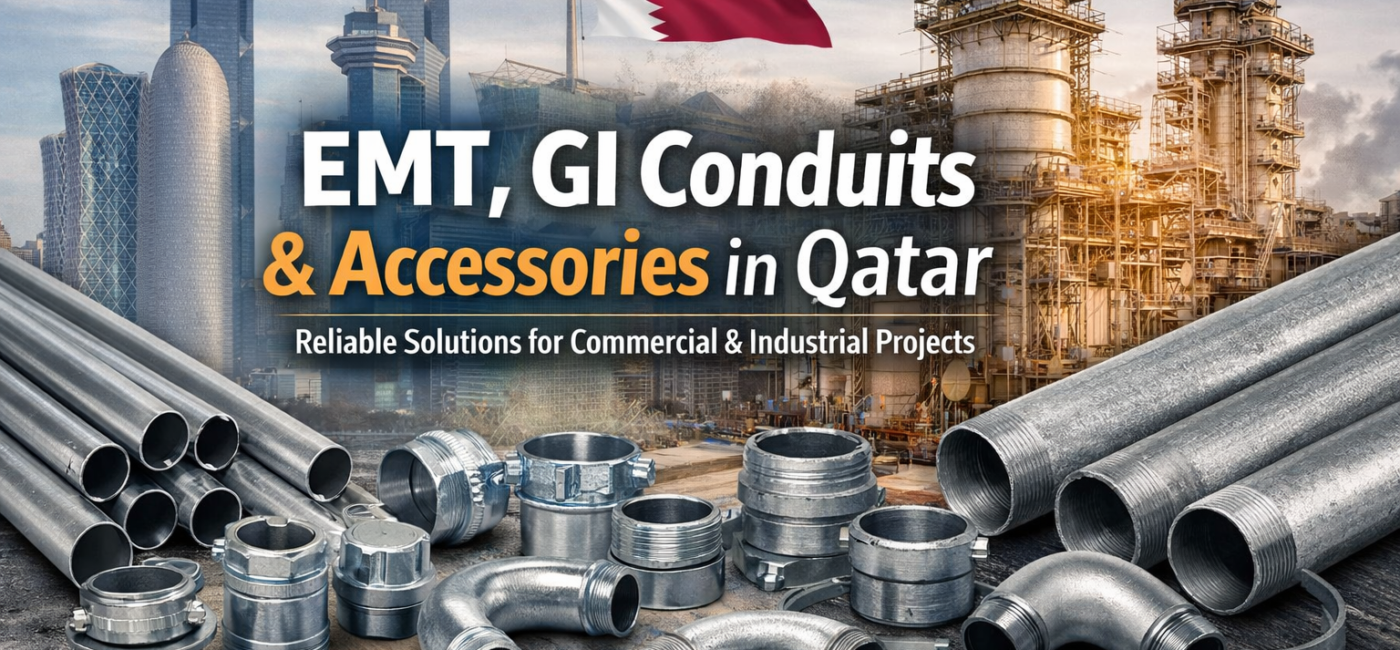
Electrical infrastructure is one of the most critical components of any commercial or industrial development. In Qatar’s rapidly expanding construction sector, selecting high-quality EMT, GI conduits & accessories in Qatar is essential to ensure safety, durability, and regulatory compliance.
From high-rise commercial towers in Doha to industrial facilities in logistics zones, conduit systems protect, organize, and secure electrical wiring against mechanical damage, moisture exposure, and fire hazards. Choosing the right type of conduit directly impacts the long-term reliability and efficiency of your electrical installation.
Understanding the Role of Electrical Conduits in Qatar’s Construction Sector
Electrical conduits act as protective channels for electrical cables. In commercial environments where large volumes of wiring are installed, conduits provide:
- Mechanical protection against impact
- Shielding from environmental factors
- Fire containment
- Electrical grounding continuity
- Organized routing of power and data cables
- Easier maintenance and future expansion
In Qatar’s climate — characterized by extreme heat, humidity, and coastal air — corrosion resistance and structural durability are especially important. This is why EMT and GI conduits in Qatar are widely used in both commercial and industrial applications.
EMT Conduits in Qatar – Flexible and Efficient Electrical Protection
What is EMT Conduit?
EMT (Electrical Metallic Tubing) is a thin-walled steel conduit designed for indoor electrical installations where strength, flexibility, and cost-efficiency are required.
Unlike rigid conduits, EMT is lighter and easier to bend, making it suitable for complex building layouts and concealed installations.
Key Features of EMT Conduits
- Manufactured from high-grade steel
- Smooth interior surface to prevent wire abrasion
- Corrosion-resistant finish
- Lightweight structure for faster installation
- Available in multiple diameters (½” to 4”)
- Standard 10-foot lengths
Applications of EMT Conduits in Qatar
EMT conduits are commonly used in:
- Commercial office buildings
- Shopping malls
- Educational institutions
- Hospitals and healthcare facilities
- Residential towers
- Interior service areas
Because EMT is easier to handle and install, it reduces labor time while maintaining strong mechanical protection for electrical wiring.
GI Conduits in Qatar – Heavy-Duty Protection for Demanding Environments
What is GI Conduit?
GI (Galvanized Iron) conduit is a rigid steel conduit coated with a protective zinc layer to prevent corrosion. It is designed for environments where higher mechanical strength and fire resistance are required.
Key Features of GI Conduits
- Hot-dip galvanized steel construction
- Thick-walled rigid structure
- Threaded ends for secure connections
- Excellent resistance to rust and corrosion
- High fire resistance
- Sizes ranging from ½” to 6”
Applications of GI Conduits in Qatar
GI conduits are widely used in:
- Industrial plants
- Warehouses
- Infrastructure projects
- Outdoor installations
- Oil & gas facilities
- Utility buildings
- High-traffic commercial areas
In coastal and outdoor environments across Qatar, GI conduits provide superior durability and long-term performance compared to lighter conduit systems.
Complete Range of EMT & GI Conduit Accessories in Qatar
Proper installation requires high-quality accessories to ensure safety and compliance. We supply a full selection of EMT, GI conduit accessories in Qatar, including:
EMT Accessories
- Compression connectors
- Set-screw connectors
- EMT couplings
- Elbows (45° and 90°)
- Conduit straps and clamps
- Locknuts and bushings
GI Conduit Accessories
- Threaded couplings
- Rigid elbows
- Conduit nipples
- Grounding clamps
- Saddles and heavy-duty supports
These accessories ensure tight connections, proper grounding continuity, and long-lasting performance of the conduit system.
Compliance with Qatar Construction Standards
All EMT, GI conduits & accessories in Qatar must comply with:
- Qatar Construction Specifications (QCS)
- National Electrical Code (NEC)
- IEC standards
- Fire safety regulations
Quality conduits are tested for:
- Mechanical strength
- Electrical conductivity
- Corrosion resistance
- Fire containment capability
Compliance ensures faster project approvals and safe building operation.
Choosing Between EMT and GI Conduits in Qatar
The selection depends on your project type and environmental conditions:
| Factor | EMT Conduit | GI Conduit |
|---|---|---|
| Installation | Faster & easier | More robust installation |
| Weight | Lightweight | Heavy-duty |
| Cost | Economical | Higher initial cost |
| Durability | Strong | Extremely durable |
| Outdoor Suitability | Limited | Highly suitable |
| Industrial Use | Moderate | Ideal |
For interior commercial buildings, EMT is often preferred.
For industrial or exposed environments, GI conduit is recommended.
Why Quality Matters in Qatar’s Climate
Qatar’s environmental conditions place significant stress on building materials. High temperatures, humidity, and saline air can accelerate corrosion and degradation.
Using certified EMT, GI conduits & accessories in Qatar ensures:
- Extended service life
- Reduced maintenance costs
- Lower risk of electrical faults
- Improved fire safety
- Long-term structural reliability
Cutting corners on conduit quality can result in costly repairs, safety risks, and inspection failures.
Trusted Supplier of EMT, GI Conduits & Accessories in Qatar
We supply premium-grade conduit systems suitable for:
- Large commercial developments
- Government projects
- Infrastructure works
- Industrial facilities
- Contractor bulk requirements

Our products are:
- Standards-compliant
- Available in multiple sizes
- Suitable for both indoor and outdoor applications
- Ready for immediate delivery across Qatar
Conclusion: Reliable EMT, GI Conduits & Accessories in Qatar for Long-Term Performance
Selecting the right EMT, GI Conduits & Accessories in Qatar is more than just a material decision — it is a long-term investment in safety, durability, and operational efficiency. In commercial and industrial environments where electrical systems operate continuously under demanding conditions, the quality of conduit infrastructure directly impacts performance and compliance.
EMT conduits offer lightweight efficiency and cost-effective installation for commercial interiors, while GI conduits provide heavy-duty strength and superior corrosion resistance for outdoor and industrial applications. When paired with high-quality conduit accessories, these systems ensure secure connections, proper grounding, and seamless electrical distribution.
In Qatar’s challenging climate and rapidly growing construction sector, choosing certified and standards-compliant conduit solutions helps prevent costly repairs, inspection delays, and safety risks. Whether for commercial towers, infrastructure projects, warehouses, or industrial facilities, investing in premium conduit systems guarantees long-term reliability and peace of mind.
For contractors, consultants, and project managers seeking dependable electrical solutions, sourcing trusted EMT, GI Conduits & Accessories in Qatar ensures every project meets the highest standards of safety, durability, and performance.