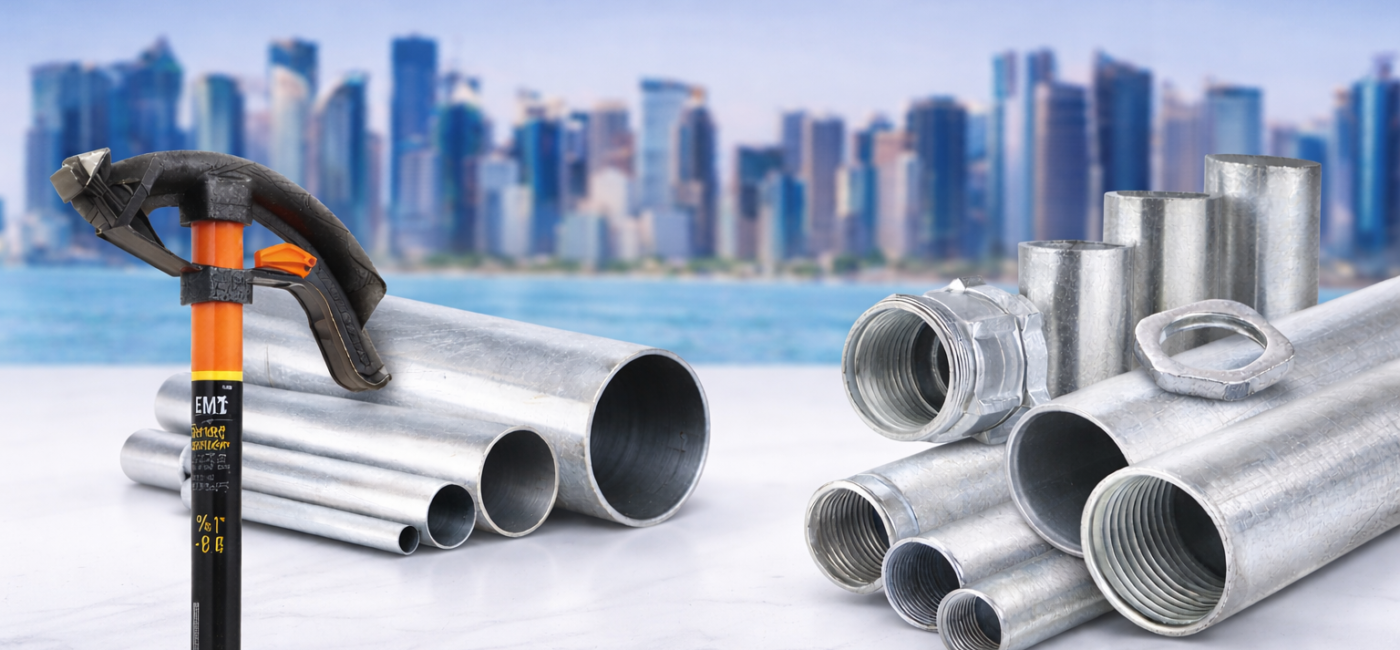
Electrical containment systems are the backbone of every modern construction project in Qatar. Whether it is a commercial tower in West Bay, a warehouse in Industrial Area, or a large-scale facility in Ras Laffan, selecting the correct conduit size is critical for safety, compliance, and long-term performance.
For contractors and procurement teams sourcing EMT, GI conduits & accessories in Qatar, understanding conduit sizing is not just a technical requirement — it directly affects installation efficiency, inspection approval, and system durability.
This comprehensive guide explains how to choose the right EMT and GI conduit sizes for electrical projects across Doha and Qatar’s industrial zones.
Introduction to EMT and GI Conduits
Before discussing sizing, it’s important to understand the role of EMT and GI conduits in electrical installations.
What is EMT Conduit?
EMT (Electrical Metallic Tubing) is a lightweight steel conduit commonly used in commercial and residential indoor installations. It is easy to bend, install, and route within false ceilings and partition walls.
EMT conduit Qatar applications include:
- Office buildings
- Retail fit-outs
- Schools and hospitals
- Residential towers
What is GI Conduit?
GI (Galvanized Iron) conduit is heavier and more durable, often available in pre-galvanized or hot-dip galvanized finishes. It provides stronger mechanical protection and higher corrosion resistance.
GI conduits are typically used in:
- Industrial plants
- Warehouses
- Oil & gas facilities
- Outdoor installations
A reliable EMT GI conduit supplier in Qatar will stock both types along with compatible fittings and accessories.
Why Correct Conduit Sizing Matters in Qatar Construction Projects
Choosing the wrong conduit size can lead to:
- Cable overheating
- Installation delays
- Failed inspections
- Increased labor cost
- Future maintenance issues
In Qatar’s high-temperature climate, improper cable fill inside undersized conduits can cause heat buildup. This may reduce cable lifespan and increase fire risk.
Proper sizing ensures:
- Adequate airflow around cables
- Easy pulling during installation
- Compliance with electrical standards
- Reduced mechanical stress
When sourcing from an electrical conduit supplier in Doha, always confirm conduit sizing aligns with cable load and project specifications.
EMT vs GI Conduit: Which Should You Choose?
While both EMT and GI conduits serve similar purposes, their applications differ depending on environment and mechanical requirements.
EMT Conduit Advantages
- Lightweight and easy to install
- Cost-effective for indoor use
- Ideal for suspended ceiling installations
- Faster bending and routing
GI Conduit Advantages
- Stronger mechanical protection
- Suitable for outdoor and industrial use
- Better corrosion resistance (especially Hot-Dip)
- Long-term durability
For indoor commercial projects, EMT conduit Qatar solutions are widely preferred. For industrial or exposed installations, GI conduit is the safer long-term option.
A professional EMT GI conduit supplier in Qatar can help evaluate project conditions before recommending the appropriate type.
Common Conduit Sizes Used in Qatar
Selecting the right diameter is crucial. Below are the most commonly used conduit sizes in Qatar construction projects.
| Conduit Size | Typical Application |
|---|---|
| ½” (16mm) | Light residential wiring, lighting circuits |
| ¾” (20mm) | Commercial lighting & small power circuits |
| 1” (25mm) | Distribution circuits, moderate cable load |
| 1¼” (32mm) | Industrial wiring, heavier cable runs |
| 2” (50mm) | Main feeders, large industrial installations |
½” and ¾” Conduits
Used mainly for lighting circuits and small commercial applications. Suitable for offices and retail environments.
1” Conduit
Common in medium-sized commercial buildings in Doha. Supports multiple cable runs while maintaining airflow.
1¼” and 2” Conduits
Used in warehouses, factories, and industrial projects in Ras Laffan and Mesaieed. These sizes accommodate larger cable bundles and higher load capacity.
When purchasing GI conduit accessories Qatar, ensure compatibility with the selected conduit size.

Cable Fill and Load Considerations
Electrical standards generally recommend that conduit fill should not exceed 40% of internal diameter capacity when running multiple cables.
Overfilling conduits can result in:
- Increased friction during cable pulling
- Heat accumulation
- Reduced cable efficiency
- Higher maintenance costs
An experienced electrical conduit supplier Doha will assist in determining appropriate conduit sizing based on:
- Cable type and insulation
- Voltage level
- Number of conductors
- Future expansion requirements
Climate and Corrosion Factors in Qatar
Qatar’s environment presents unique challenges that influence conduit selection.
High Temperatures
Heat affects cable insulation and conduit expansion. Larger conduit sizes may be required in high-load systems to improve airflow.
Coastal Humidity and Salt Exposure
Projects in Lusail, Al Wakrah, and Doha Corniche experience high salt concentration in the air. GI conduits with proper galvanization offer superior protection.
Industrial Conditions
Industrial zones expose conduit systems to vibration and chemical vapors. In such cases, GI conduit with corrosion-resistant accessories is recommended.
Choosing durable EMT, GI conduits & accessories in Qatar ensures long-term system integrity.
Installation and Safety Considerations
Correct conduit sizing alone is not enough. Proper installation practices are equally important.
Ensure Correct Bending Radius
Using professional tools like EMT benders ensures smooth bends without damaging conduit walls.
Use Matching Accessories
Always use compatible fittings such as:
- Couplings
- Connectors
- Saddles
- Locknuts
High-quality GI conduit accessories Qatar improve system stability and reduce inspection issues.
Proper Grounding
Metal conduits must be properly grounded to comply with safety regulations in Qatar.
Where to Buy EMT & GI Conduits in Qatar
Choosing a trusted supplier is just as important as choosing the correct size.
When selecting an EMT GI conduit supplier in Qatar, look for:
- Complete range of conduit sizes
- Stock availability for bulk projects
- Certified quality products
- Industrial-grade fittings
- Competitive pricing
If you are searching for a reliable electrical conduit supplier Doha, ensure they provide:
- EMT conduit Qatar stock
- GI conduit accessories Qatar
- Technical consultation
- Project-based bulk supply
For high-quality EMT, GI conduits & accessories in Qatar, contact our team today. We supply complete conduit systems for commercial, residential, and industrial projects across Doha and Qatar industrial zones.
Request a quote for bulk orders and project-based supply.
Final Thoughts
Selecting the right conduit size is a critical decision in Qatar’s construction industry. It impacts installation efficiency, compliance, safety, and long-term system durability.
By working with a reliable EMT GI conduit supplier in Qatar, contractors and engineers can ensure they choose the right conduit size for every project — from commercial towers in Doha to industrial facilities across Qatar.
If you need expert guidance or bulk supply, contact us today.